
Schrödinger‘s Box
This is a Schrödinger’s box in which players can rescue cute little kittens from other worlds! Through the box, we can see six different worlds where the kittens live – each with its own life and unique way of existing.
Tilt your phone to shake the bag inside the box and rescue the kitten. If the kitten survives, the player can tap the heart on the screen to gain energy and unlock the kitten’s memories.
My Role
Under the guidance of the course instructor, I independently completed the overall concept, design, and production of the project.
For the Unity development, I collaborated with a programmer who assisted with the technical implementation of the core mechanics.
My responsibilities included:
Concept ideation based on the course theme
Game flow and interaction structure
Visual identity and interface design
Asset creation in 2D and 3D
Audio design and integration
Coordinating the Unity implementation and handling content integration
Results
Delivered a fully playable mobile game prototype built in Unity
Completed 6 unique parallel-world kitten designs with distinct visual themes
Implemented responsive mobile interaction including tilt-based mechanics
Produced a short gameplay demo video showcasing core interactions
Presented the project as part of the Complex Design course and received positive feedback from the instructor and peers
Platform
Mobile (tablets & smartphones)
Tech Stack
Unity · Adobe Photoshop · Figma · Adobe Audition · Blender


M.A. Multimedia | VR Design
Instructor: Guest Prof. Sarah Buse
Course: Complex Design
Winter semester 2024/2025
Schrödinger’s Cat – A Thought Experiment in Quantum Mechanics
The thought experiment was proposed in 1935 by Erwin Schrödinger to illustrate the superposition of quantum states.
A cat is placed in a closed box together with a radioactive atom.
The atom has a 50% chance of decaying or not decaying.
If it decays, a mechanism is triggered that kills the cat.
According to the Copenhagen interpretation, the atom (and thus the cat) is in a superposition of states – the cat is both alive and dead at the same time, until someone opens the box and “fixes” its state by observing it.
Significance:
The experiment illustrates the paradox of quantum mechanics: particles can exist in multiple states at the same time until they are measured.
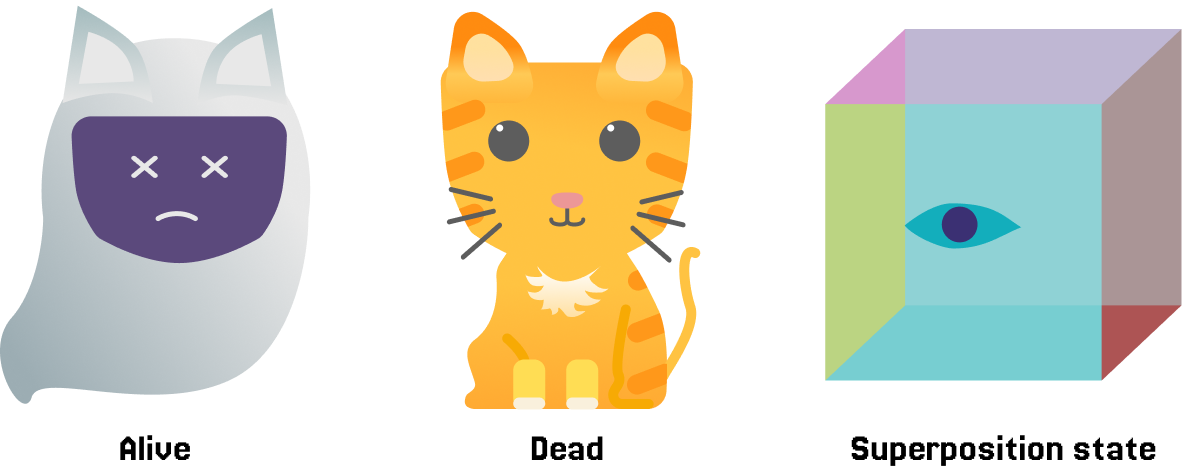
Before the box is opened, the cat is in a superposition of being both alive and dead; once the box is opened, the cat assumes a definite state (alive or dead). This concept serves as the core source of inspiration for the game’s mechanics and overall design.
Core Gameplay
The core goal of the game is to help the player release cats from Schrödinger’s box in different parallel worlds. Each time the box is opened, the cat’s state collapses into either “alive” or “dead”, depending on the random or conditional mechanics defined in the game.
Players tilt their phone to shake the bag inside the box, guiding it as it falls through different universes and triggers events. When a cat survives, a heart icon appears on the screen. By tapping the heart, the player gains energy, which is later used for memory collection.
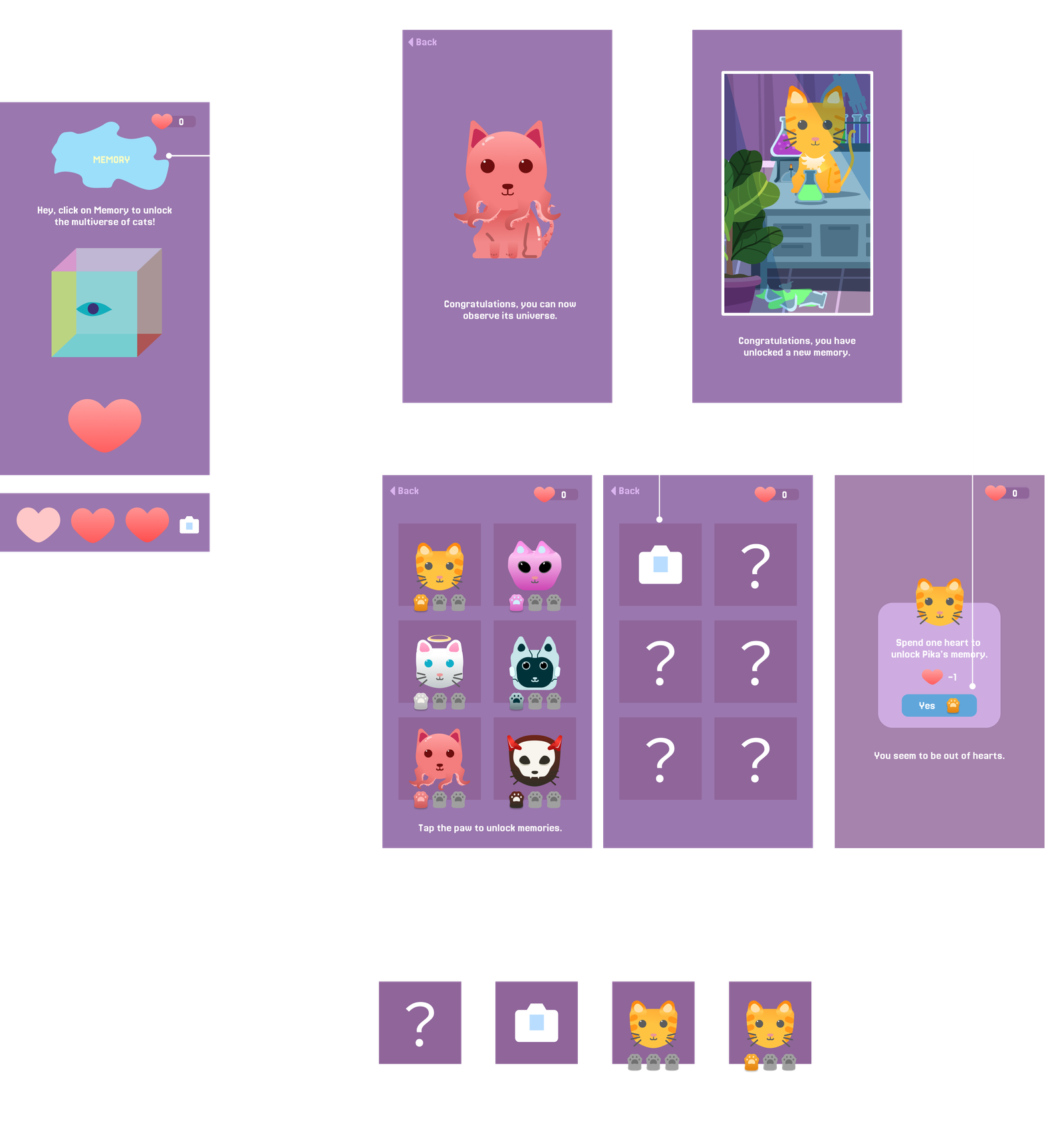
The game is built around a multi-world structure with six distinct universes. In each universe, the cat has its own unique appearance and way of life – for example, in the skeleton world, the cat eats special “bone cookies”. Before being released, every cat appears in an “unknown state”, represented by a question-mark icon. Only after the player successfully interacts with it does the cat’s true state become visible and its icon is updated. This change is directly linked to the unlock conditions of the collection system.
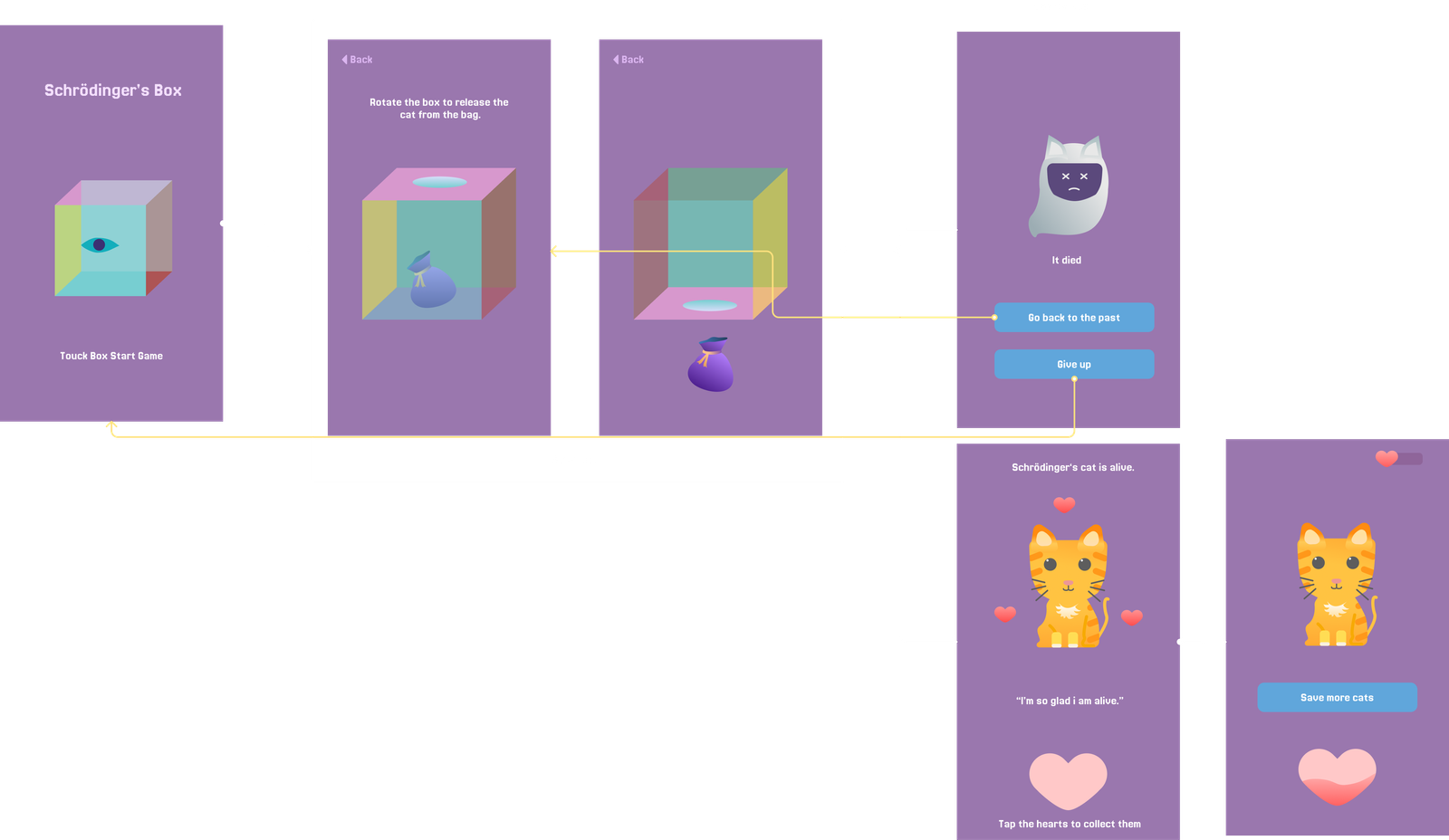
The core goal of the game is to help the player release cats from Schrödinger’s box in different parallel worlds. Each time the box is opened, the cat’s state collapses into either “alive” or “dead”, depending on the random or conditional mechanics defined in the game.
Players tilt their phone to shake the bag inside the box, guiding it as it falls through different universes and triggers events. When a cat survives, a heart icon appears on the screen. By tapping the heart, the player gains energy, which is later used for memory collection.
The game is built around a multi-world structure with six distinct universes. In each universe, the cat has its own unique appearance and way of life – for example, in the skeleton world, the cat eats special “bone cookies”. Before being released, every cat appears in an “unknown state”, represented by a question-mark icon. Only after the player successfully interacts with it does the cat’s true state become visible and its icon is updated. This change is directly linked to the unlock conditions of the collection system.
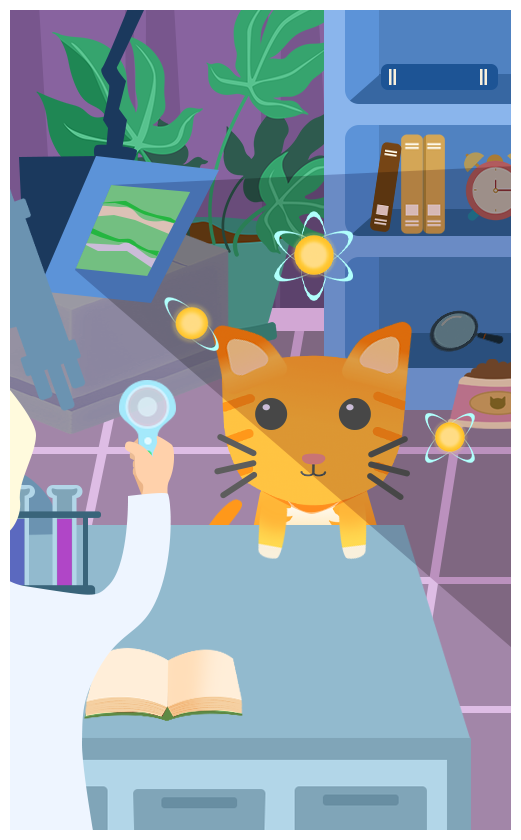
Visual & Audio Design
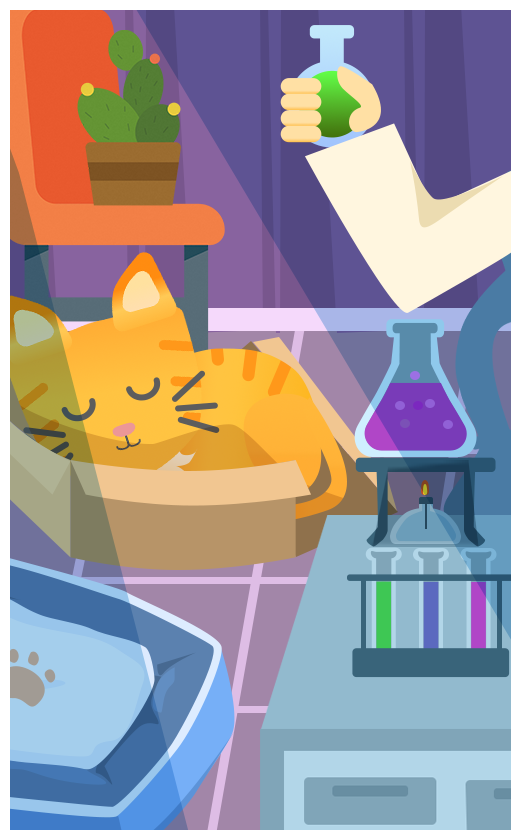
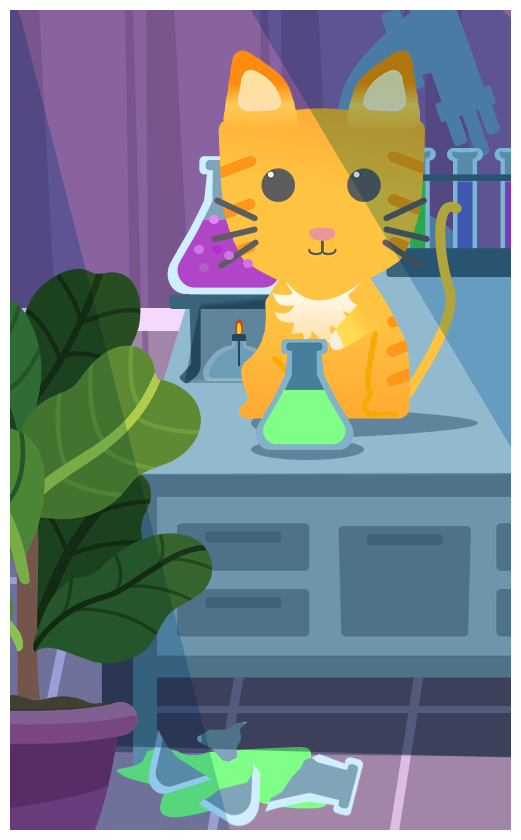
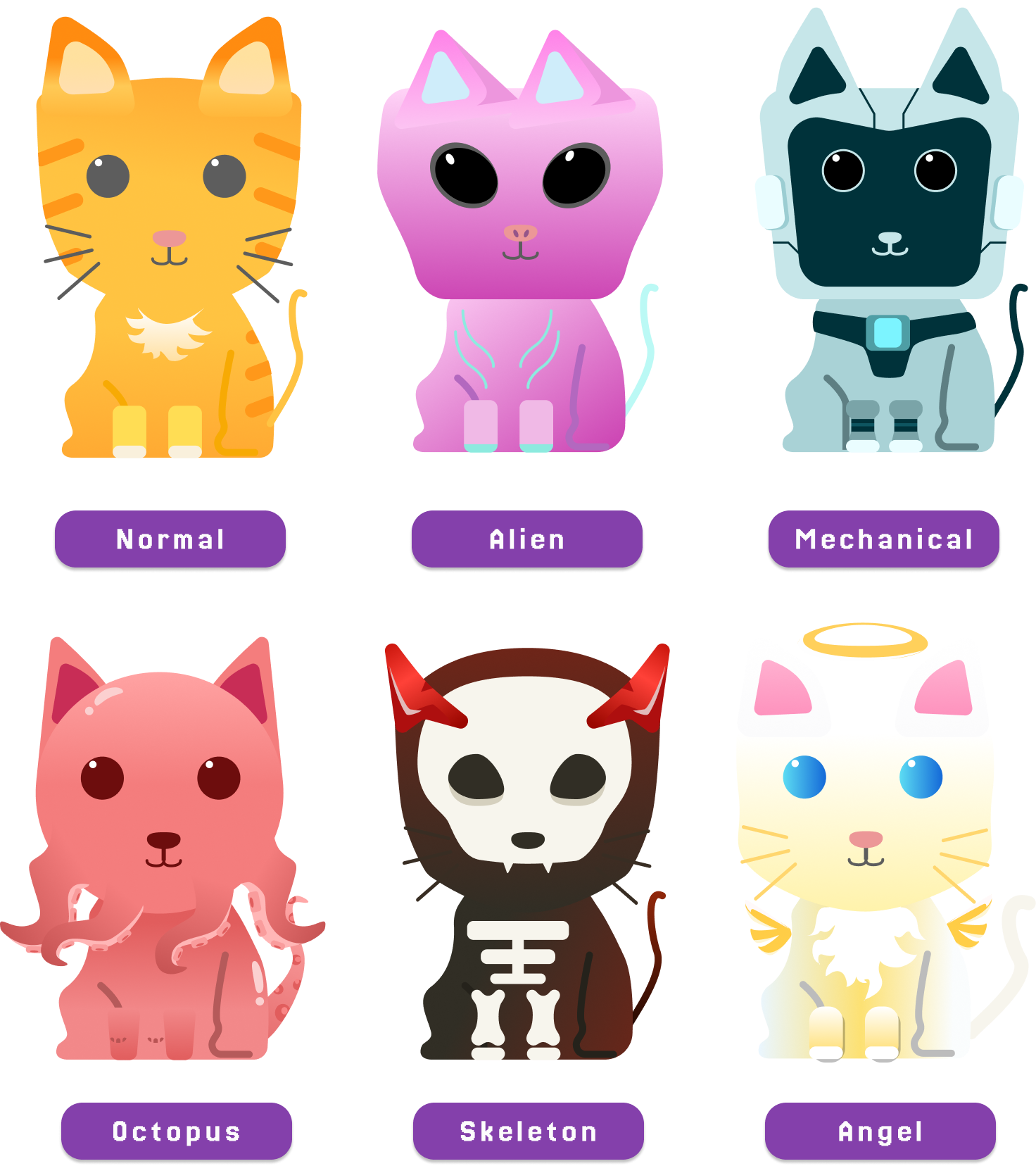
- Click sound effect for the heart:
https://pixabay.com/zh/sound-effects/soft-plop-97691/ Sound effect for the heart rising:
https://pixabay.com/zh/sound-effects/touching-the-water-176713/Click sound effect for buttons / game start sound:
https://pixabay.com/zh/sound-effects/greanpatch-166007/Sound effect for unlocking memories:
https://pixabay.com/zh/sound-effects/badge-coin-win-14675/Background music:
https://pixabay.com/music/ambient-meditation-stress-reduction-yoga-and-sleep-127566/
Prototype design
All core ideas and interface layouts were first explored in Figma, where I created wireflows and interactive prototypes.
Art production
3D models and UI elements such as the box and the bag were modeled in Blender.
Illustrations and additional graphic assets were created and refined in Adobe Photoshop.
Audio editing
Music and sound effects were primarily sourced from Pixabay. Selected assets were edited and mixed in Adobe Audition.
Game engine & programming
The game was developed in Unity. Parts of the programming work were supported by an experienced teammate.
Testing & iteration
Throughout development, I continuously tested the game to identify issues and refine the experience. All feedback and bug notes were documented in Figma to support later iterations and improvements.